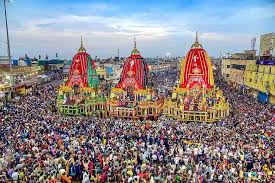
PURI RATH YATRA

DOOR TO MOKSH

Puri Rath Yatra, also known as the Festival of Chariots, is a grand and spiritually significant event celebrated in Puri, Odisha. This festival is deeply rooted in the traditions of Hinduism and is dedicated to Lord Jagannath, an incarnation of Lord Vishnu, along with his siblings, Lord Balabhadra and Devi Subhadra. The Rath Yatra symbolizes the journey to moksha (liberation from the cycle of rebirth), offering devotees an opportunity to attain spiritual elevation and ultimate salvation.

RITUALS & CHARIOTS

  1. Snana Purnima: The festival preparations begin with the Snana Purnima ritual, where the deities are bathed with 108 pitchers of water from the sacred Indradyumna tank. This ceremonial bath marks the beginning of the deities’ annual journey.
  2. Anasara: Post Snana Purnima, the deities are kept away from public view for a period known as Anasara, during which they are believed to fall ill. Devotees believe that during this time, the deities are offered special herbal medicines and undergo a period of rest and recovery.
  3. Netrotsava: After the Anasara period, on the eve of Rath Yatra, the deities are given a special ritual known as Netrotsava or ‘Festival of the Eyes,’ where their eyes are ritually painted, symbolizing their rejuvenation.
  4. Rath Yatra: On the auspicious day of the Rath Yatra, the deities are brought out of the Jagannath Temple and placed on three grand chariots:
    • Nandighosa: The chariot of Lord Jagannath, decorated in vibrant yellow and red colors, has 16 wheels.
    • Taladhwaja: The chariot of Lord Balabhadra, adorned in green and red, has 14 wheels.
    • Darpadalana: The chariot of Devi Subhadra, featuring black and red, has 12 wheels.

The chariots are immense wooden structures, intricately decorated with religious symbols, and are pulled by thousands of devotees through the streets of Puri to the Gundicha Temple, a journey that represents the deities visiting their birthplace.

  1. Chhera Pahara: The Gajapati King of Puri performs the Chhera Pahara ritual, where he sweeps the chariots with a golden broom, signifying that everyone is equal in the eyes of the Lord.
  2. Gundicha Temple: Upon reaching the Gundicha Temple, the deities stay for nine days, symbolizing their visit to their maternal aunt’s home. This period is marked by continuous festivities and rituals.
  3. Bahuda Yatra: After nine days, the deities make their return journey to the Jagannath Temple, known as Bahuda Yatra. This return is also accompanied by grand celebrations and rituals.

Spiritual Significance and Moksha

The Puri Rath Yatra is not just a religious festival; it is a profound spiritual journey for devotees. Participating in the Rath Yatra is believed to be a path to moksha, or liberation from the cycle of birth and rebirth. Several aspects contribute to this belief:

  1. Darshan: The sight of Lord Jagannath on the chariot is considered highly auspicious. It is believed that even a single glimpse can cleanse the soul of past sins and purify the heart.
  2. Bhakti and Surrender: Pulling the chariots is an act of devotion and surrender to the divine will. It symbolizes the soul’s journey towards God, emphasizing humility and devotion.
  3. Equality: The Chhera Pahara ritual, performed by the king, underscores the message of equality and the insignificance of worldly distinctions in the pursuit of spiritual enlightenment.
  4. Unity and Community: The collective participation in the festival fosters a sense of unity and shared spiritual experience, enhancing communal harmony and collective spiritual growth.
  5. Symbolic Journey: The entire procession from the Jagannath Temple to Gundicha Temple and back represents the cyclical journey of the soul and its ultimate return to the divine source.

In essence, the Puri Rath Yatra is a profound embodiment of faith, devotion, and the eternal quest for moksha, where devotees from all walks of life come together to experience divine grace and spiritual liberation.